CHU CI · A FIRST READING
Mountain Spirit (Shan Gui): a first reading of the Nine Songs poem
The mountain figure first appears through clothing, a glance and a smile. Before deciding who that figure must represent, look closely at how the poem lets them appear.
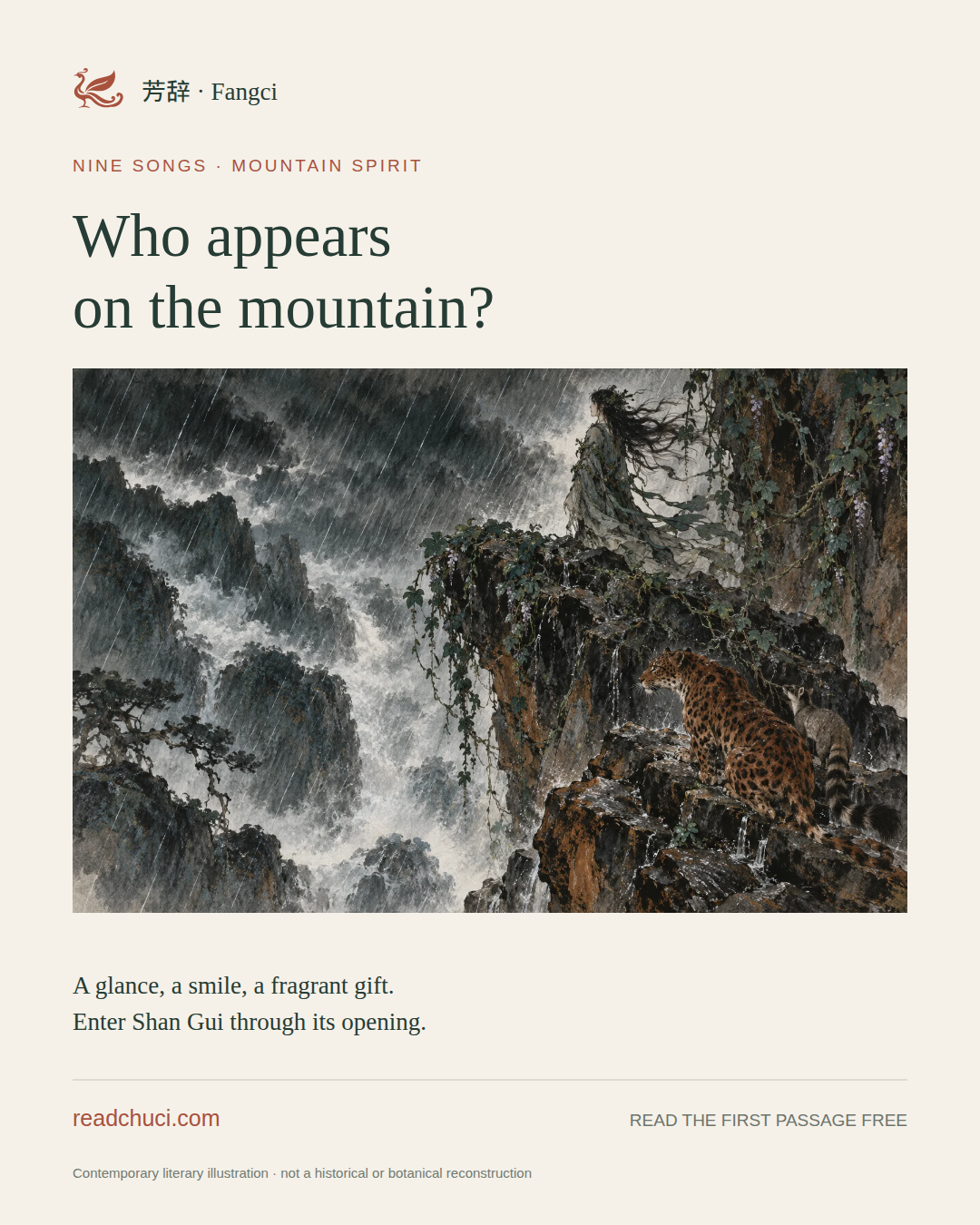
若有人兮山之阿,被薜荔兮带女萝。A figure appears on the mountain's slope, clothed in creeping plants. The opening invites an encounter before it offers a settled identity.
Where the poem belongs
Shan Gui is one of the eleven pieces in the Jiu Ge, or Nine Songs, within the Chu Ci collection. Its title is commonly rendered Mountain Spirit. The collection is traditionally associated with Qu Yuan; questions about ritual performance, speakers and textual history need more than a title or a modern illustration to settle them.
For a first reading, begin with the visible actions in the opening passage. The mountain figure describes adornment and attraction, travels with striking animals, and gathers fragrant things. These details create an appearance that seems confident and ready for an encounter.
Clothing makes the mountain visible
The first line places the figure on the mountain; the next dresses them in plants. Instead of thinking of the setting as a backdrop, notice how it comes onto the body. The same world supplies a place to stand, something to wear and something to offer.
The names of ancient vines and fragrant plants have histories of interpretation. Modern species labels are useful only when supported by evidence. An illustration of a beautiful plant is a literary suggestion, not a botanical identification.
A glance and a smile are actions
The opening continues with a look, a smile and an assertion of attractiveness. Ask who is doing the looking and who is being addressed. The figure is not merely a still portrait: the language tries to establish a relation with someone else.
Read the first passage twice. On the first pass, list what can be seen. On the second, list the gestures towards another person. This separates the beauty of an image from the desire that gives the image a purpose.
What should remain open
The figure's gender, identity and broader significance have been read in different ways. A modern image can make one interpretation feel immediate, but it should not quietly turn that choice into a fact about the poem. Begin with the text, compare commentaries, and leave room for interpretations you have not yet examined.
Fangci's accompanying pictures are contemporary literary illustrations. Read them alongside the Chinese lines and notes rather than as evidence of an ancient costume or the historical appearance of a deity.
Try the free passage
The free opening on Fangci includes Chinese text, English explanations, character pinyin, word notes and passage commentary. Ask: what does the mountain figure choose to show, and how do fragrant gifts direct that beauty towards someone else? You can answer from this passage without needing to settle every debate about the entire poem.
All first passages are free. The rest of Shan Gui and the full collection open with one-time paid access. The reading page keeps the Chinese text close to its explanations so you can return to the original words as your question develops.